
The slab up top works harder than the brick below it
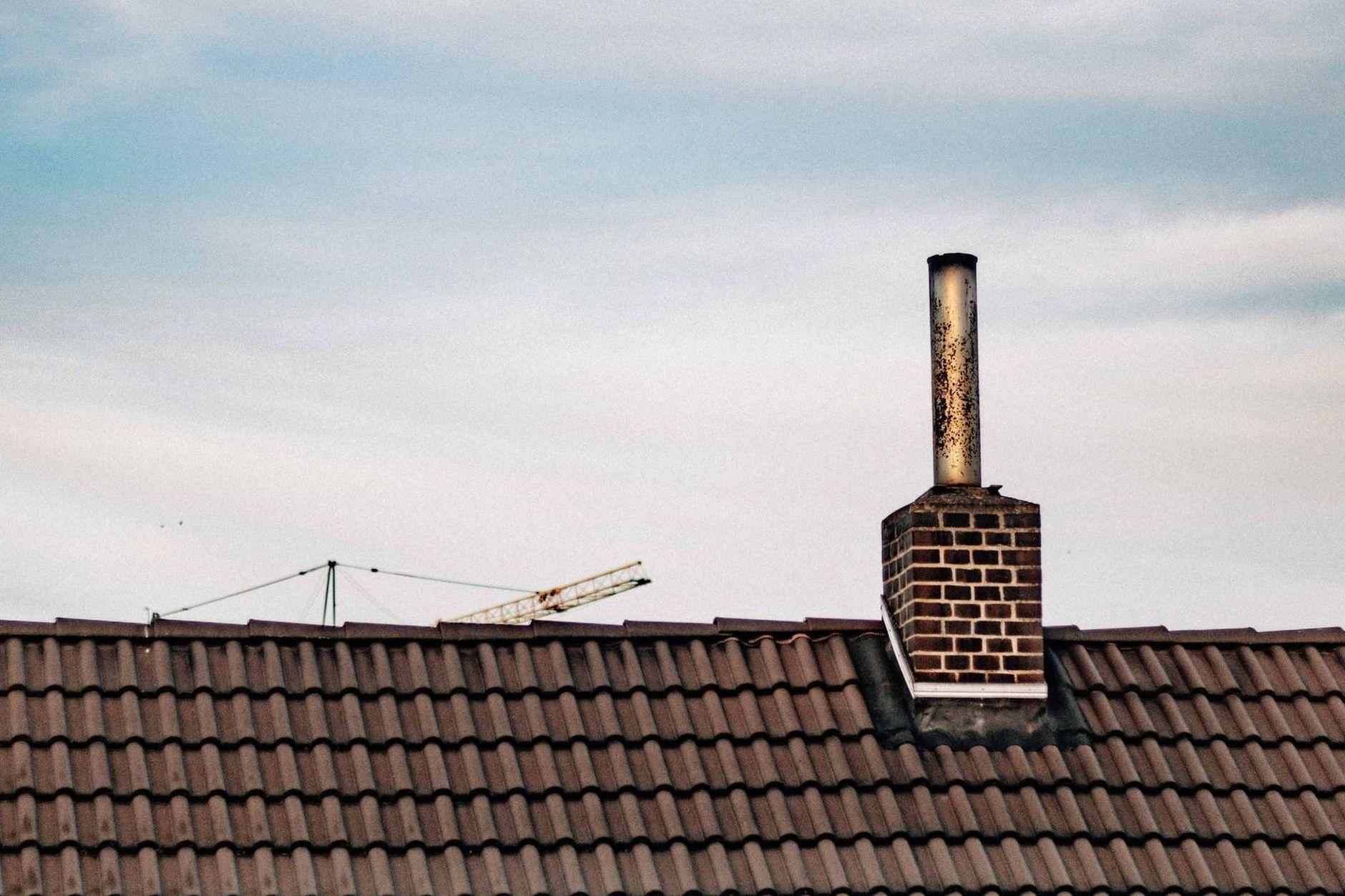
Look up at the top of a brick chimney in Orange and you will usually see a flat or gently sloped slab of concrete or mortar with the flue tile standing out of it. Masons call it the crown. Of everything on a chimney it takes the most direct sun, the hardest rain and the widest swings in temperature, and it is the piece we replace more than any other.
When it fails, water gets into the top courses of brick. From there the damage works downward: joints soften, brick faces pop off, and the flue tile loosens in its bed. A crown problem caught early is a small job. Left through a few wet winters it becomes part of a rebuild.
Why crowns on older houses split
Most crowns we open up in Orange were made one of two ways. Some were cast properly, as a thick slab with an edge that throws water past the brick. Many more were troweled on as a thin coat of the same mortar used in the joints, finished flat or with a slight hump, and stuck hard to the flue tile.
That second kind fails for reasons a mason can list from memory:
- Too thin. A layer an inch or so deep has no strength to resist heat movement.
- Wrong material. Joint mortar is made to be soft and porous. Used as a roof, it drinks rain and passes it down.
- Locked to the flue. Clay tile heats and grows. Locked tight to it, the slab gets pushed apart from the inside every time the fireplace runs.
- No overhang. Water leaving the edge runs straight down the face of the brick instead of dropping clear.
Summer sun on a dark slab and the first heavy storm of winter make all four worse.
Sealing or recasting: what the mason checks
There are two honest repairs for a split crown, and we choose between them with a hand on the slab.
Sealing suits a crown that is thick enough, still stuck fast to the brick, and showing fine surface cracks. We clean the top, open and fill each crack, and coat the slab with a crown product that stretches as the concrete moves. The original crown stays.
Recasting is the answer when the slab is thin, loose, broken through, or missing its edge. We break the old one off down to the top course, test that course, and pour a new slab inside a form that gives it depth, fall and a drip edge. Between the new concrete and the flue tile we leave a joint packed with a flexible material, so heat in the tile cannot split the slab again.
If the brick under the old crown is loose, that joins the job too, and you hear about it before the new crown goes on.
What decides the price
A crown repair has no fixed figure on our price list, because size and condition change too much from house to house. These set your number:
- Seal or recast. Sealing costs a small fraction of a full recast.
- Footprint. A narrow single-flue stack is a much smaller pour than a wide chimney carrying two or three flues.
- The brick underneath. Firm top courses mean the new slab goes straight on; loose ones add masonry work.
- The cap. A cap has to come off for crown work. A rusted one is better replaced than refitted; a new one is priced once we have measured the flue, and its size and metal set what it costs.
- Access. Roof pitch, height and tile type.
If your crown looks cracked from the ground, or there are stains on the brick just below the top, fill in the quote form with your address in Orange and what you can make out from the yard. We call back to arrange a roof visit and write the price from there.
What we look at on the roof
A crown visit is short, but it covers more than the slab:
- the slab's depth, fall and edge;
- every crack, and whether it runs through or only across the surface;
- the joint between slab and flue tile;
- the top four or five courses of brick under the edge;
- the cap, its screen and how it is fixed down.
Where water has plainly been getting in, we would rather pair crown work with a Level 2 inspection at $405, so we can see whether the tile under the slab has cracked as well.
Coatings finish a repair, they do not replace one
People ask whether a clear repellent on the brick could stand in for crown work. It cannot. Repellents have a place on sound masonry, and our waterproofing service explains when they earn it. They do not close a split slab or hold loose brick together. Mend the crown and the joints, then protect the face.
Where a crown fits in a bigger repair
A cracked crown is often the first line on a longer list. If water has been getting in for a while, the joints below may need repointing; see our masonry repair page. If it already shows indoors, the leak repair prices post covers the other ways water gets past a chimney. And when the brick under the slab has gone, the rebuild cost guide explains how a top-section rebuild is priced. The service itself is on our crown repair page.
Have the top looked at
A crown costs far less to put right than the brick it protects. If nobody has been on the roof above your fireplace in Orange for some years, ask for a crown visit on our contact page.
Have a Mason Look at Yours
Marsh Chimney Group works on brick chimneys in Orange and across Orange County. We test the joints, read the brick and the crown, and send a written scope that names each repair, its material and its price before any work begins.